Strength in movement.
Peace of mind.
Time to explore your body, follow your breath and discover how good it feels to move.
What is Yoga?
Yoga is a rich family of practices rooted in Indian philosophy and spiritual life. Movement is one part of it, alongside breathing, meditation, self-study and the way we relate to the world.
Yogic traditions have developed over centuries. The term derives from the Sanskrit root yuj, meaning “to unite” or “to yoke,” reflecting its goal of creating harmony between the body, mind, and spirit.
Yoga combines physical postures (asana), breathing techniques (pranayama), and meditation (dhyana) to promote health, flexibility, and mental well-being. I teach Hatha and Yin Yoga, exploring both the energy of active practice and the quiet of longer-held postures.
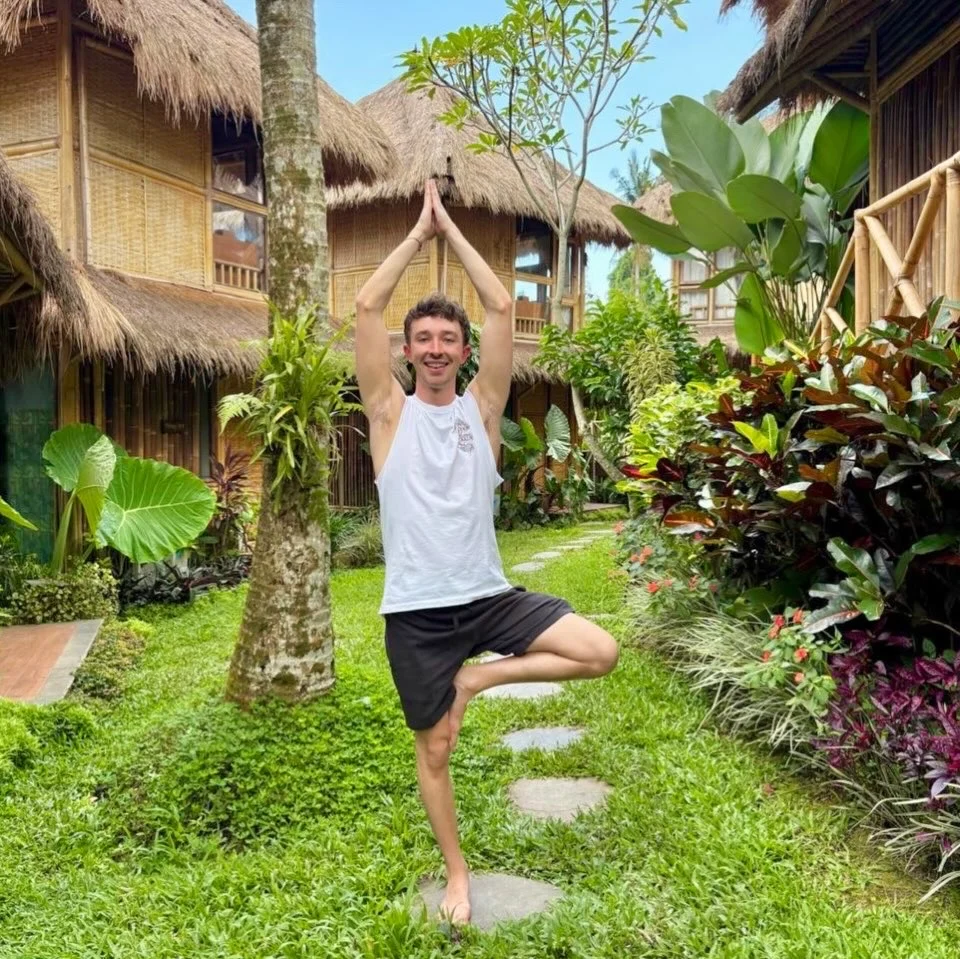
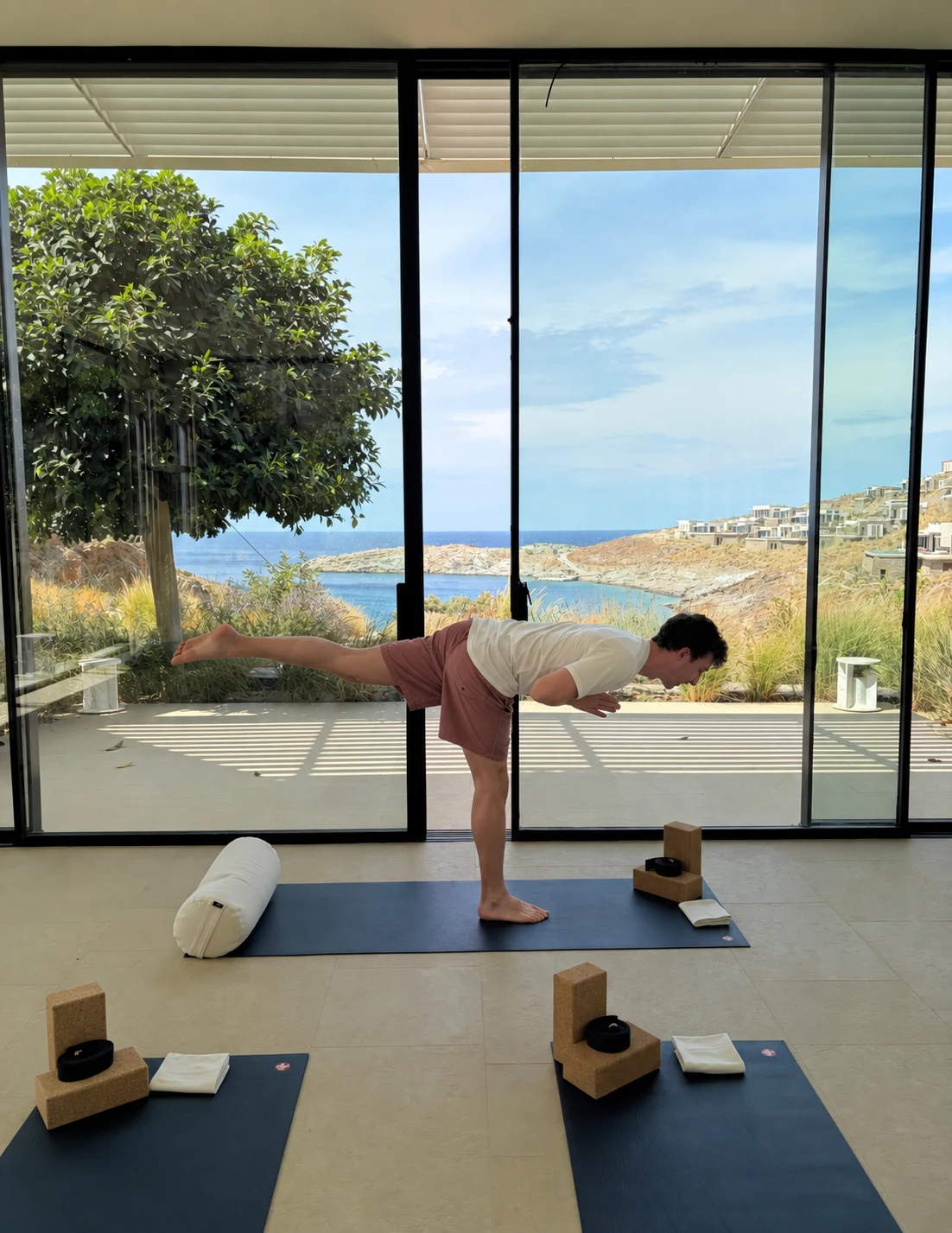
On the mat, we might build strength in a standing posture, find balance on one foot or enjoy the release of a supported stretch. The philosophy of Yoga reaches into everyday life, too. Ideas such as non-harming, honesty and contentment invite us to consider how we treat ourselves and others.
 Steady in the body. Present in the breath.
A strong foundation.
Space to explore.
Hatha gives us time to explore a posture, feel our footing and bring thoughtful effort to the practice.
Hatha Yoga is a broad tradition that works with the body and breath as part of a spiritual practice. It developed in India around a thousand years ago, with early practitioners using postures, breathing techniques and other physical methods to direct Prana or vital energy.
'ha' represents the sun and 'tha' the moon. Their union expresses the bringing together of solar and lunar energies within the body. Today, Hatha is often used as an umbrella term for physical Yoga, encompassing approaches such as Vinyasa, Ashtanga and Iyengar. Hatha usually suggests a measured pace, with time to explore individual postures and their alignment.
My classes combine flowing movement, standing and floor work, balance, breath awareness and rest. There are options for more or less challenge. You do not need to arrive flexible.
Ground yourself
Feel your feet meet the mat as you explore balance, build strength and grow more confident in each posture.
Enjoy the stretch
Give yourself time to reach, lengthen and unwind, finding a comfortable stretch without forcing the shape.
Rest in Shavasana
Lie back in this final resting posture, allowing your body to relax as you absorb the benefits of your practice.
Change the pace.
Listen more closely.
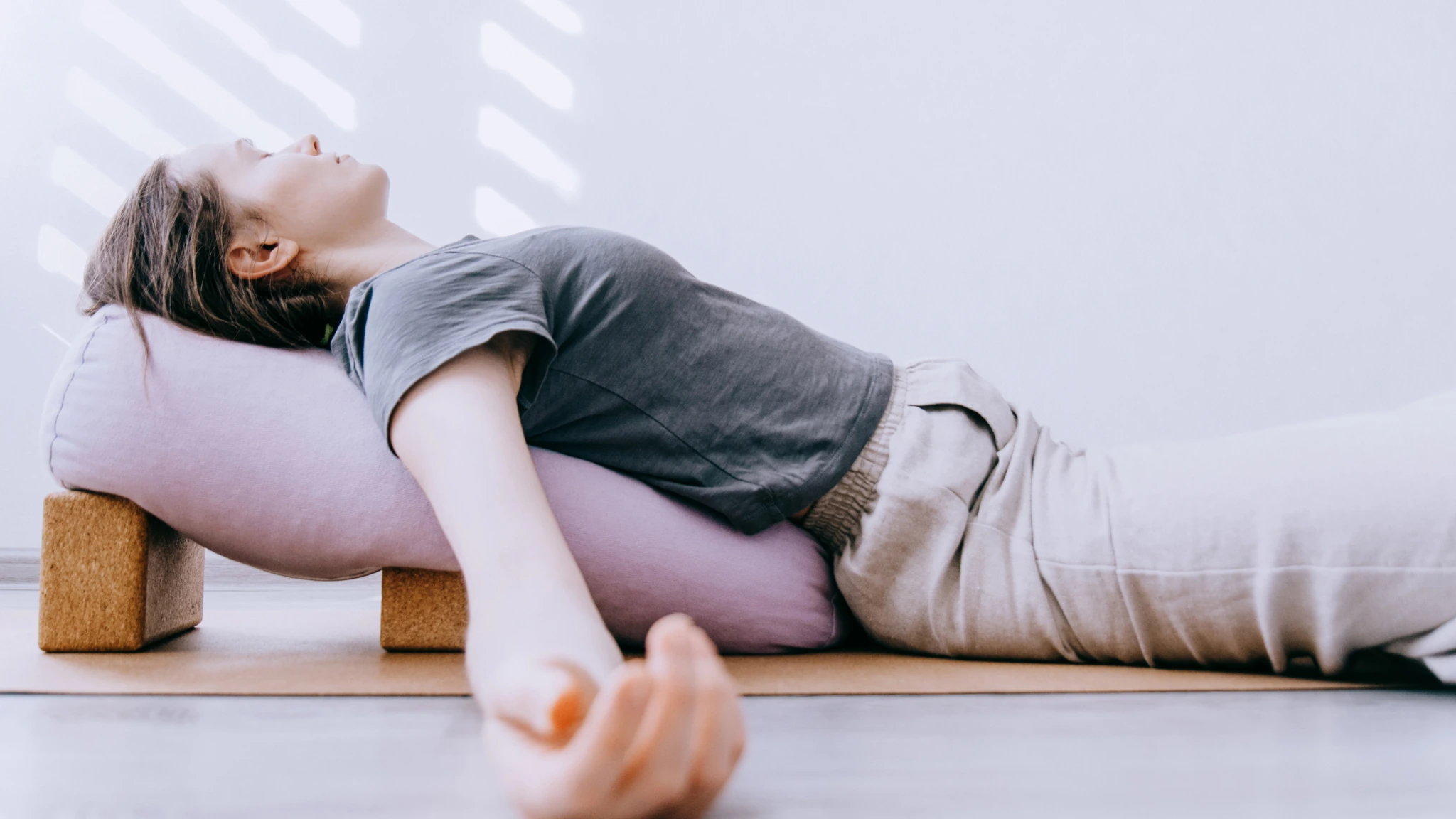
Yin Yoga invites us to slow down through longer-held postures, usually seated or lying down. We stay for several minutes, allowing unnecessary muscular effort to soften while gently loading the body’s connective tissues, including fascia.
Influenced by Taoist Yoga, many approaches to Yin also incorporate Traditional Chinese Medicine and its meridian system. Postures and sequences may be chosen with particular meridians in mind, adding an energetic perspective to the physical and meditative practice.
Yin complements Hatha with longer holds and a quieter pace. Bolsters, blocks and blankets help adapt each posture to your body, supporting your weight and making a stretch more manageable. With that support, you can soften unnecessary effort and give more attention to your breathing and the changing sensations of each pose.
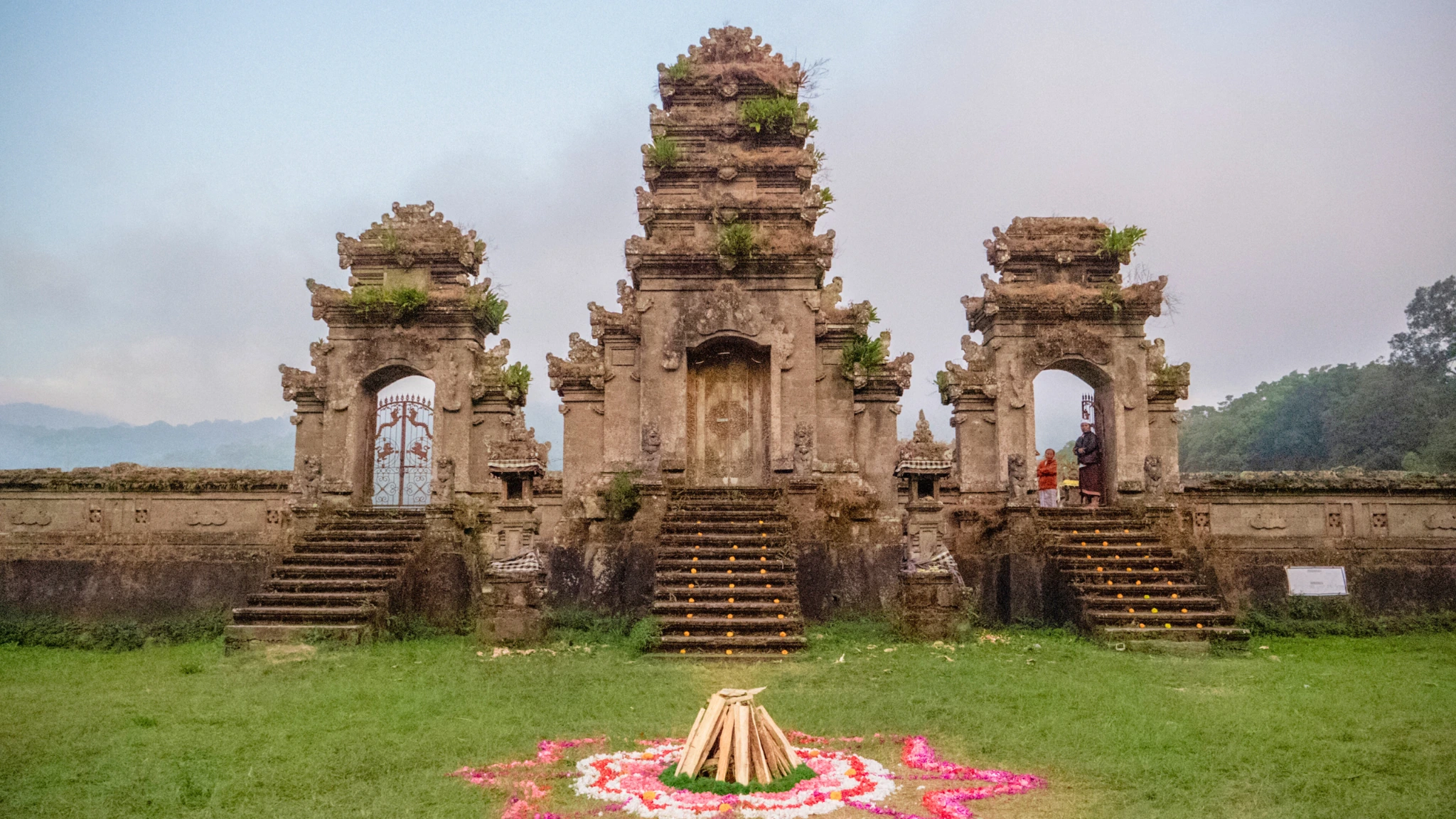
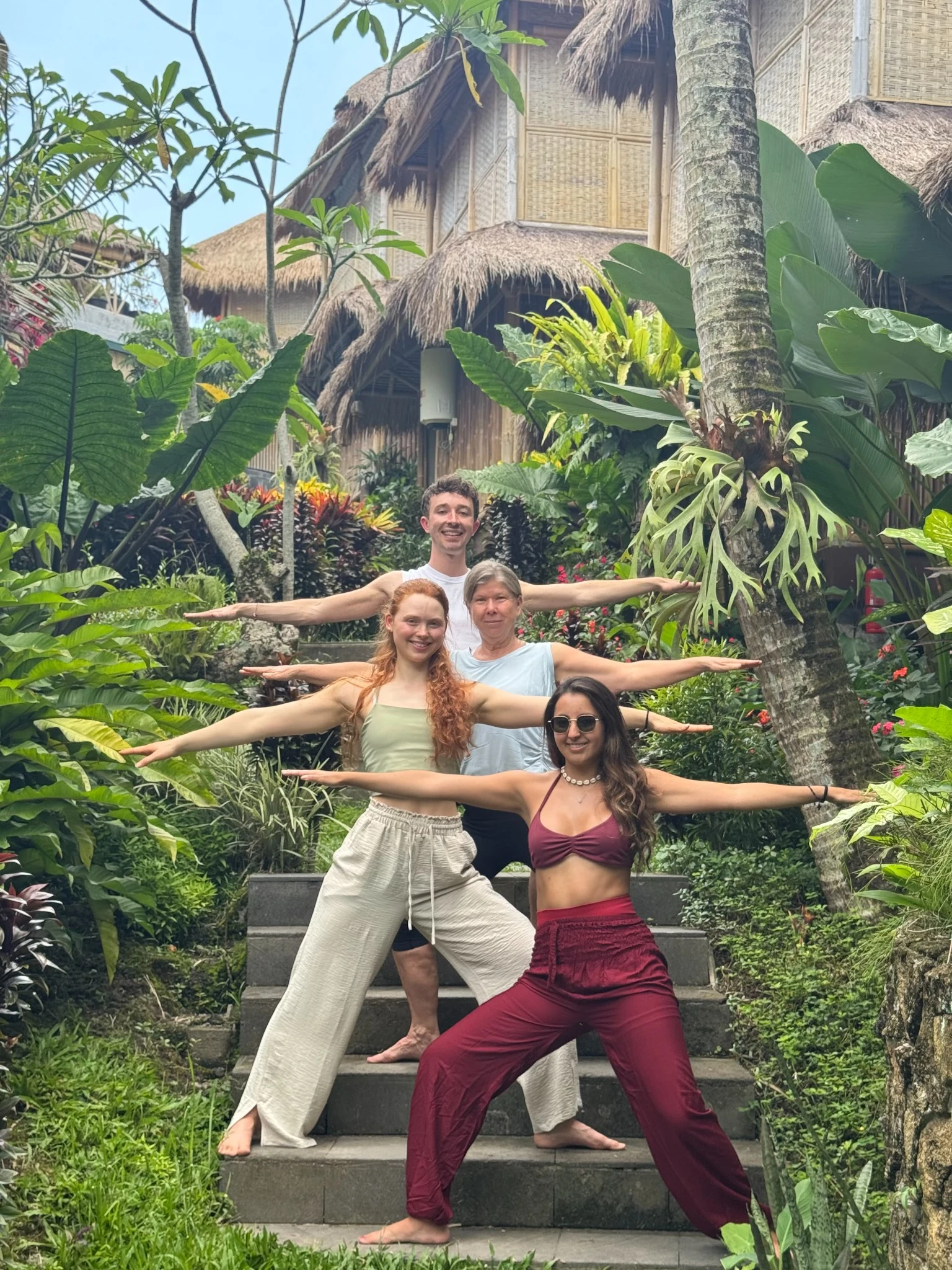
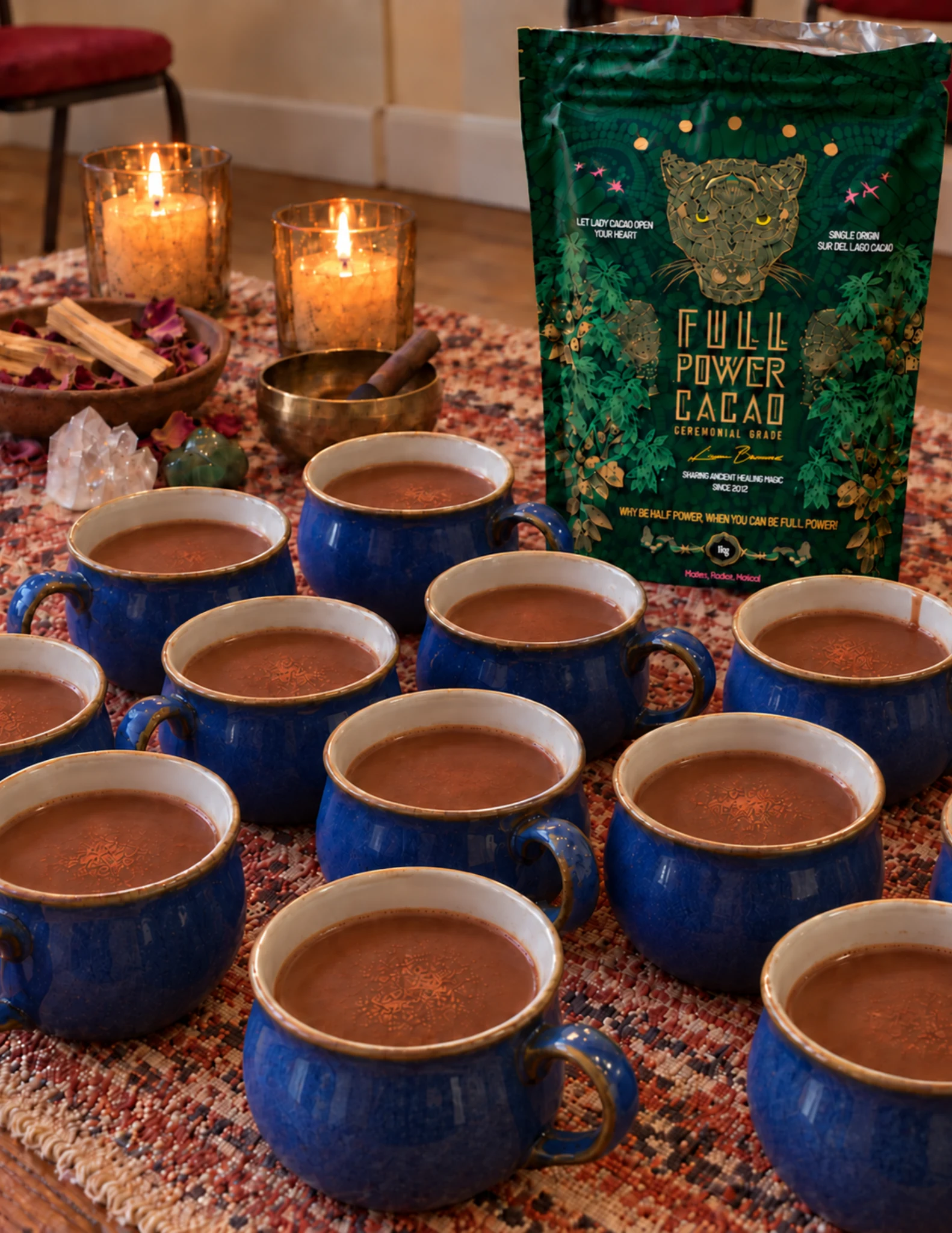
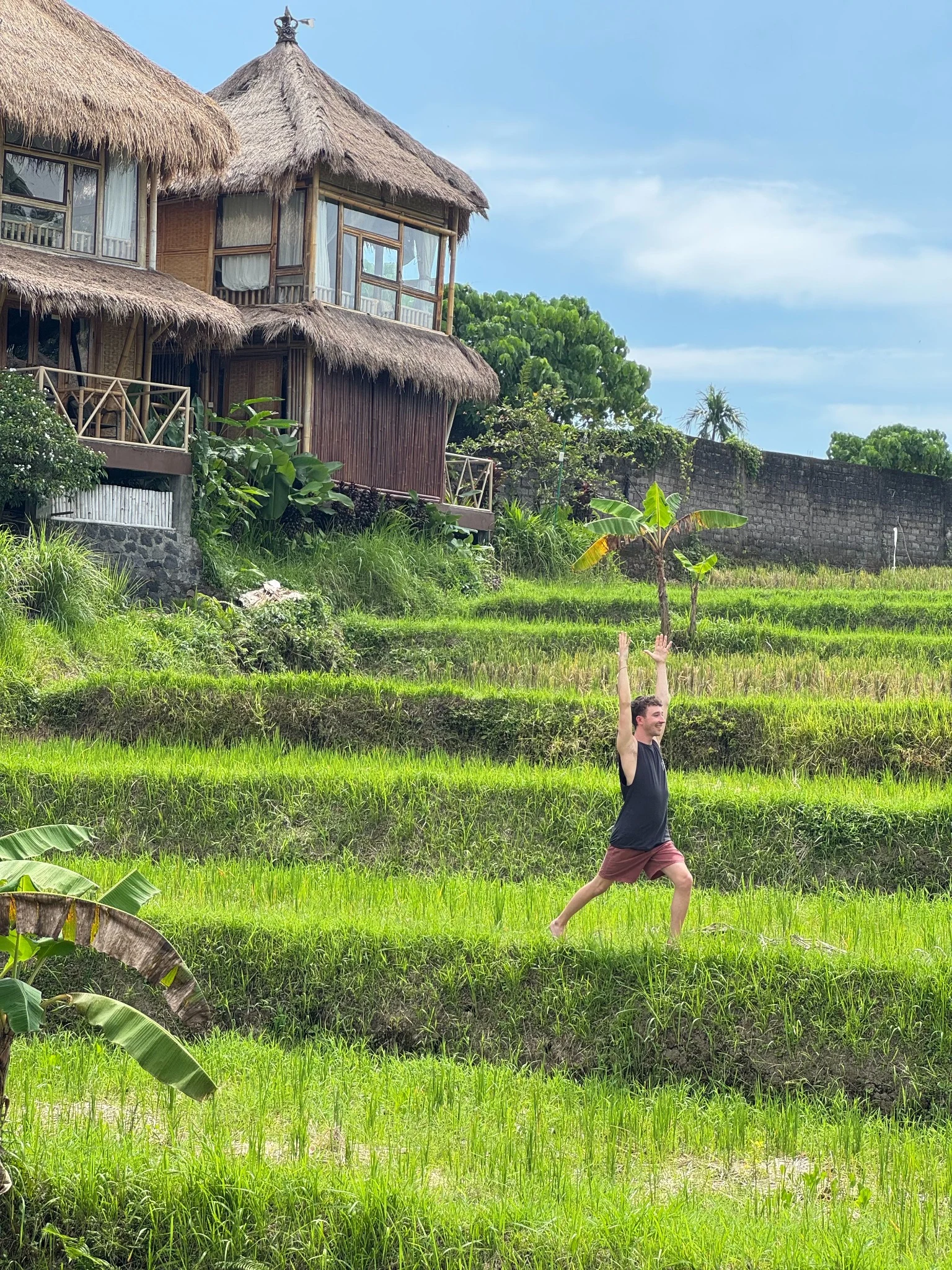
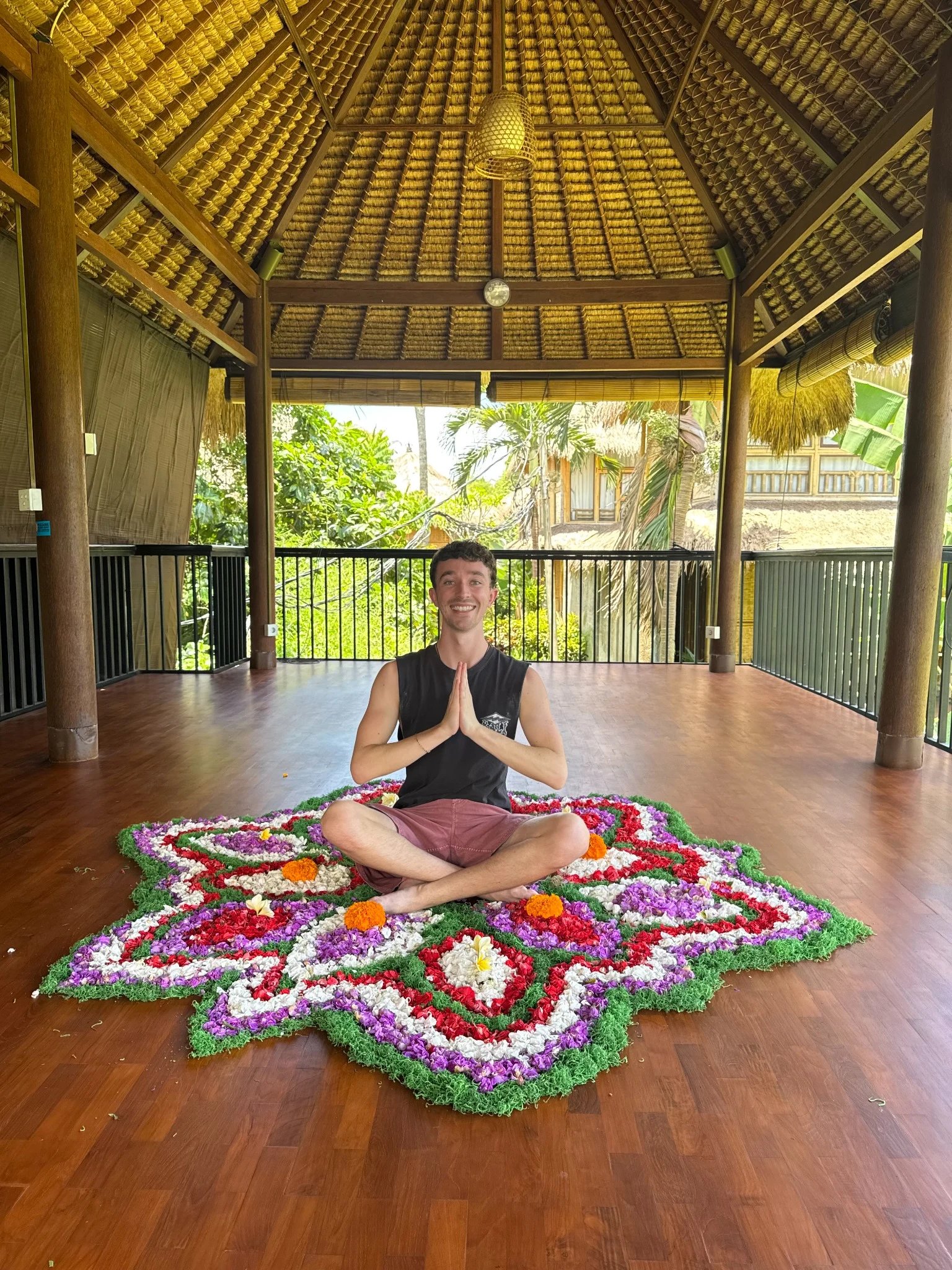
From Bali,
into everyday life.
My classes bring a slow-flow Vinyasa approach to mindful movement, with a focus on nervous system regulation through breath awareness, a steady pace and nourishing stretches and holds.
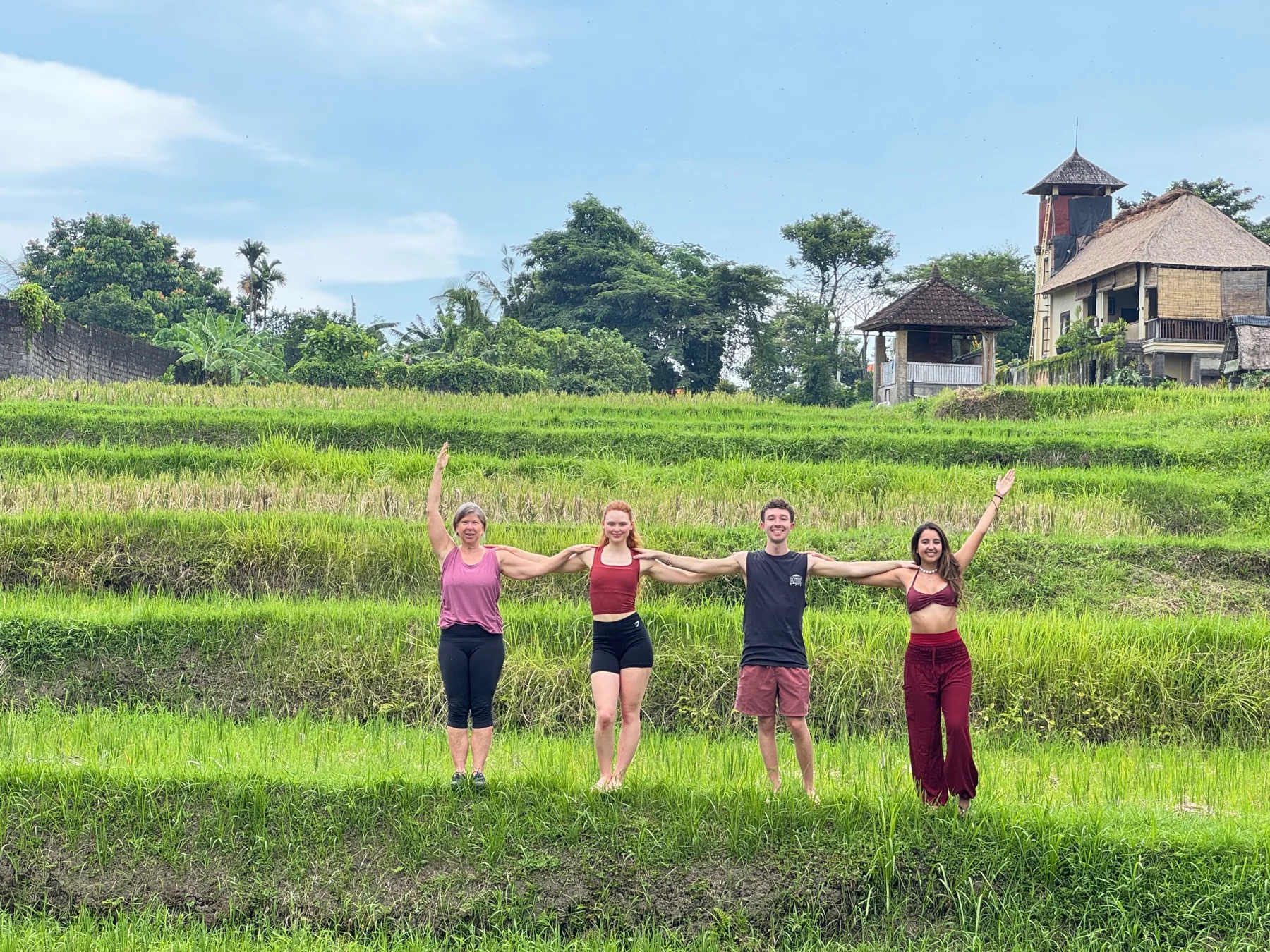
Why not take a look at my upcoming retreats to deepen your Yoga & Qigong practices with other like-minded individuals.
There’s more to explore.
Take a closer look at the practices and ideas behind your time on the mat.
Chakras
Seven centres, their traditional symbols and the practices that bring them to life.
ExploreBreath & prāṇāyāma
Prāṇa, the nāḍīs and four breathing methods you may meet in Yoga.
ExploreThe eight limbs
Ethics, posture, breath and meditation: a practical guide to Patañjali’s eight limbs.
ExploreStyles of Yoga
Hatha, Yin, Vinyasa, Ashtanga, Kundalini, Kriya, Iyengar, Yoga Nidra and modern class names explained.
Explore